
Wholesale ATV & Dirt Bike FAQ: MOQ, Lead Time, Certifications, Spare Parts, Warranty & Dealer Support

What dealers and importers confirm before placing a wholesale order.
If you sell, import, or distribute off-road vehicles, you already know the questions that decide whether a factory is worth an order — and they rarely get answered on a product page. This FAQ is written for ATV dealers, dirt bike importers, powersports distributors, farm-equipment wholesalers, rental-fleet buyers, and regional agents who are close to requesting a wholesale quote and want the commercial details settled first.
Whether you’re sourcing wholesale ATVs or wholesale dirt bikes, below we cover MOQ, lead time, certification basics, spare parts, warranty support, OEM and private-label options, and dealer support. Where exact figures depend on the model, configuration, and destination market, we say so plainly — the precise numbers are confirmed at quote rather than guessed at here. When you’re ready, you can send your shortlist for a quote.
Quote-Readiness Checklist
Use this as a fast scan before you send an RFQ — the detail behind each row follows below.
| Buyer Question | Why It Matters | What to Confirm Before Ordering |
|---|---|---|
| MOQ | Sets your minimum capital outlay and container economics | Minimum for your model mix and any customization |
| Lead time | Drives your stocking calendar and cash-flow timing | Production vs. stock timing plus shipping to your market |
| Certifications | Determines whether you can legally import and sell | Which documents apply to your vehicle type and destination |
| Spare parts | Protects your service reputation and resale | Recommended parts list, fast-wear items, and reorder process |
| Warranty | Defines your risk and what you promise customers | Coverage scope, exclusions, and the cross-border claim workflow |
| OEM / private label | Decides whether you build a brand or resell a catalog | What’s customizable and the design-to-production timeline |
| Dealer support | Affects how well you can sell and service after delivery | Technical, marketing, and logistics support included |
| Shipping | Controls landed cost and arrival certainty | Incoterm, port/warehouse routing, and documentation provided |
What Is the Minimum Order Quantity (MOQ) for Wholesale ATVs and Dirt Bikes?
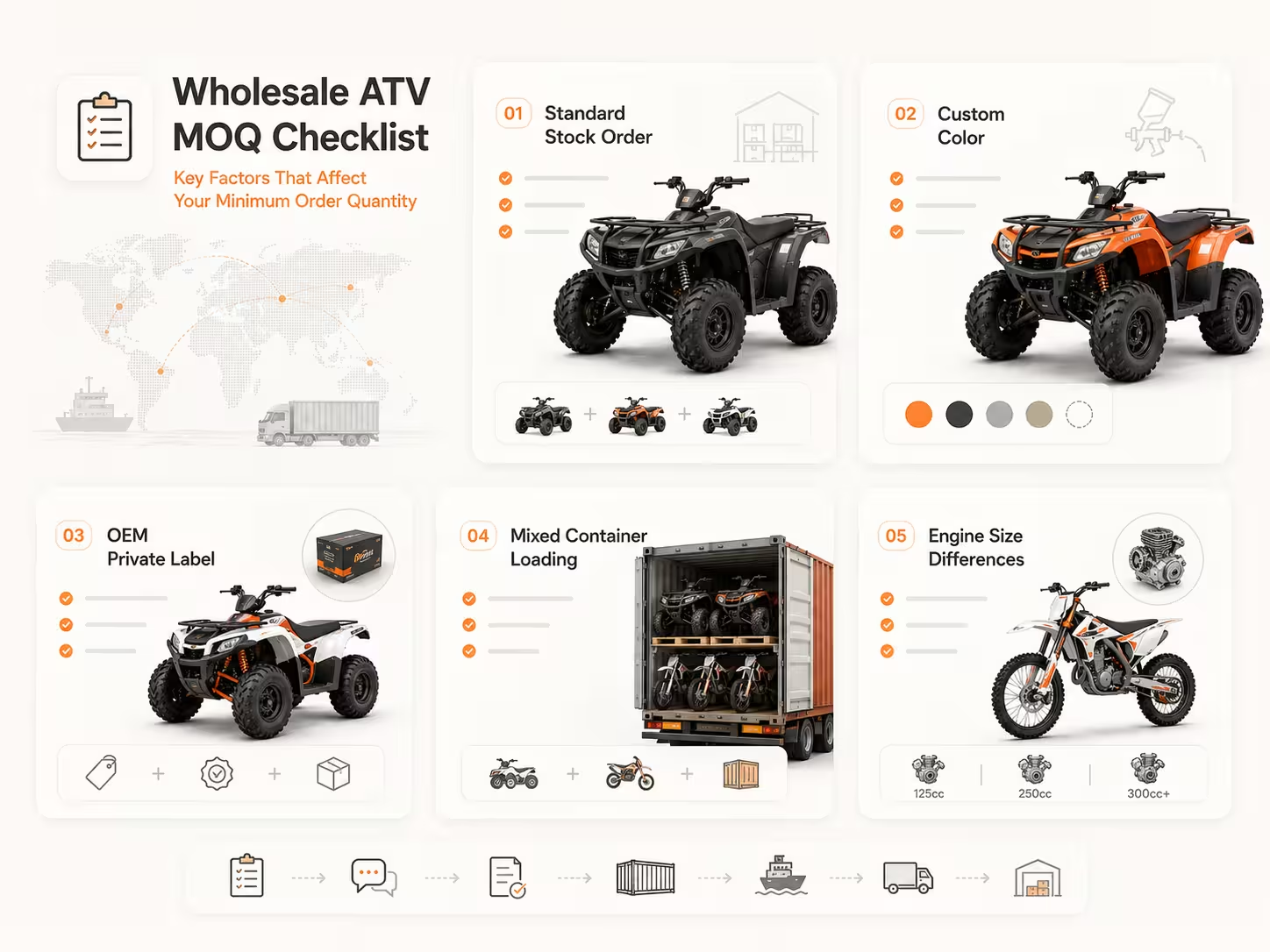
There is no single MOQ for every ATV wholesale or dirt bike wholesale order — the practical minimum is driven by what you order and how it’s built. As a rule, the more standardized the order, the lower the minimum; the more customized it is, the higher it tends to be.
| Order type | Relative MOQ | Why |
|---|---|---|
| Standard / in-stock specification | Lower | No tooling or custom setup; units already configured |
| Custom color or livery | Moderate | Paint/finishing batches have efficient run sizes |
| Full OEM / private label | Higher | Branding, spec, and packaging carry setup costs |
| Mixed-model container | Set by container fit | Governed by how units load, not a per-model count |
For a wholesale ATV program, MOQ also shifts with engine class: entry and youth models occupy less space and allow more units per container than large 4WD machines, which affects how a minimum is expressed in practice. The same logic applies to a dirt bike wholesale order, where compact pit bikes load very differently from full-size enduro machines.
Mixed-model and mixed-container orders
Most dealers don’t want a full container of one SKU. Mixing models — say, a spread of 125cc and 2WD ATVs with a few larger units, or a blend of ATVs and dirt bikes — is normally workable, with the minimum governed by container loading rather than a rigid count per model. To confirm your minimum, share the models and quantities you have in mind.
What Is the Typical Lead Time for a Wholesale ATV or Dirt Bike Order?
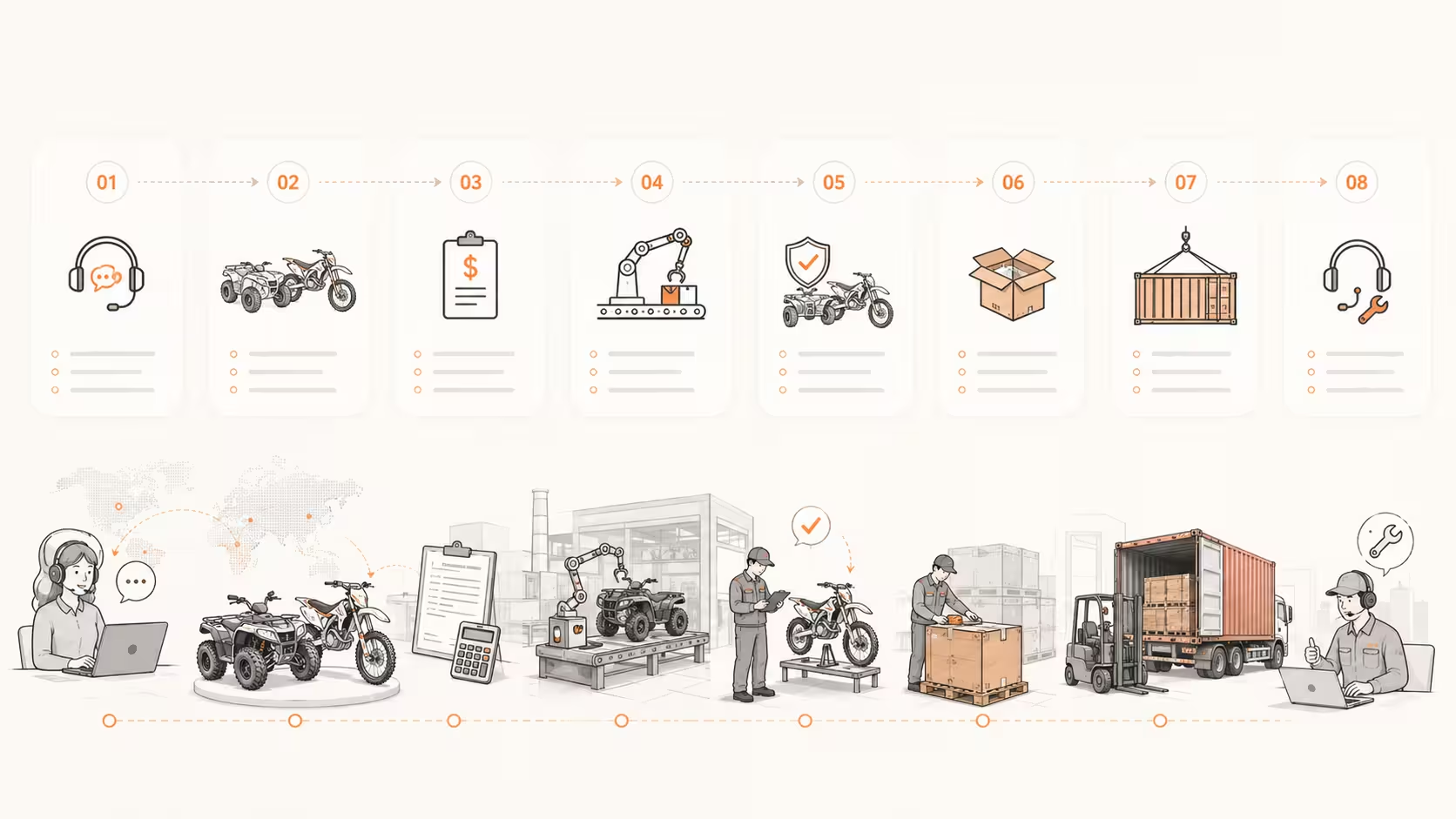
Lead time has two parts: production (or stock pick) plus shipping to your market. Rather than a fixed number, think in terms of the factors that move it.
| Factor | Effect on lead time |
|---|---|
| In-stock, standard models | Fastest — units picked, inspected, dispatched |
| Standard production order | Moderate — built to schedule after confirmation |
| OEM / private-label build | Longer — adds design approval, sampling, branded production |
| Peak season / high demand | Longer — production calendars fill before busy periods |
In-stock and regional warehouse options
If stock or regional inventory is available for your shortlisted models, it may shorten the delivery timeline for certain markets. Because availability changes, treat any timeline as something to confirm against current stock and the production calendar for your models. An order-specific lead time comes with your quote, along with the recommended Incoterm so you can plan landed cost and arrival.
What Certifications Do Wholesale ATVs and Dirt Bikes Need?
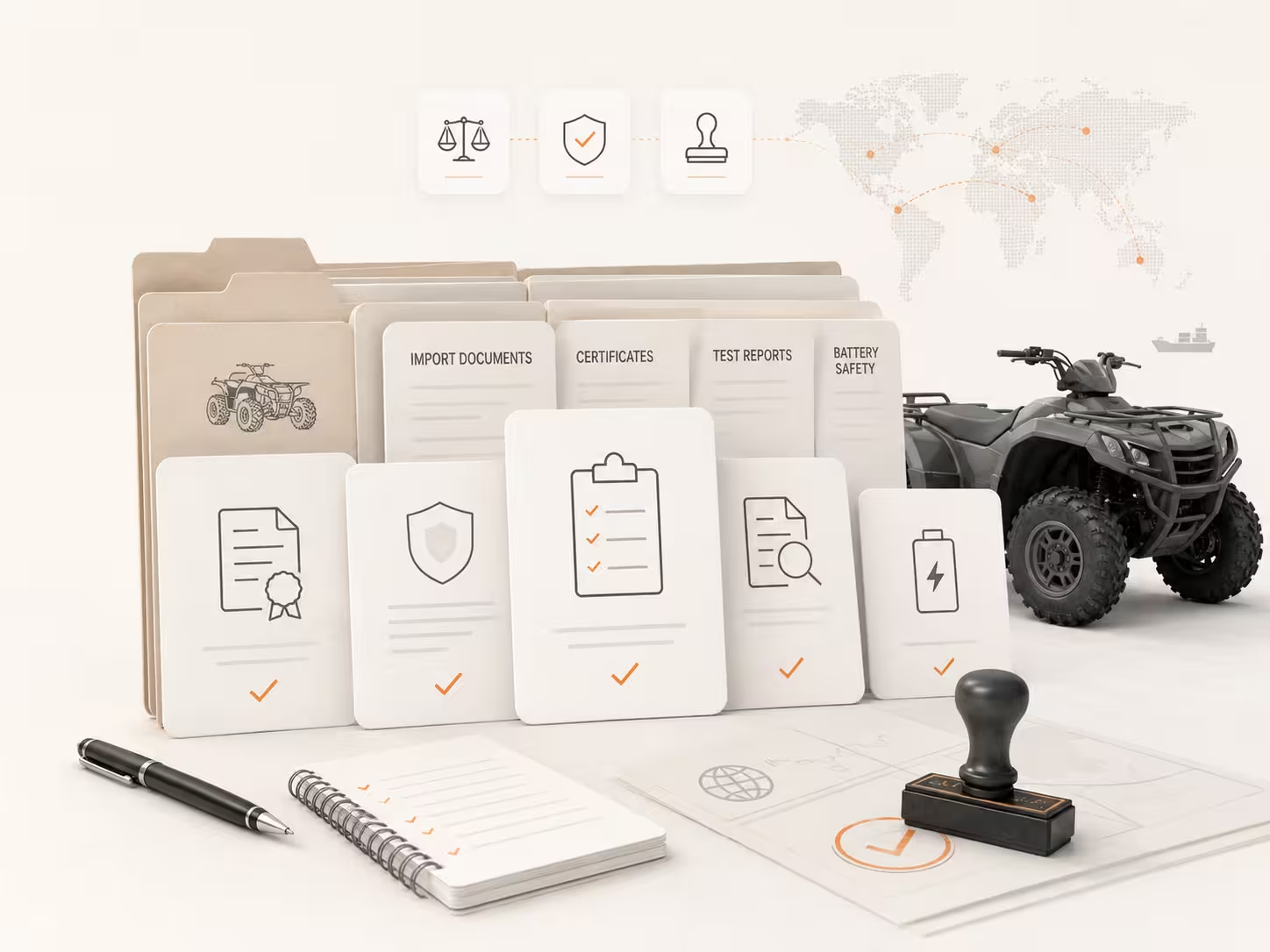
This is the most misunderstood part of off-road wholesale, so it’s worth being precise: there is no universal certificate that every ATV or dirt bike must carry. What is required depends on several factors, and confirming them for your market is ultimately the importer’s or distributor’s responsibility.
Why requirements vary
Which documents and approvals apply to a given vehicle depends on the factors below. Treat the “Documents to Discuss” column as a prompt for conversation with your customs broker and the manufacturer — not a checklist of universal requirements.
| Compliance Factor | Why It Matters | Documents to Discuss |
|---|---|---|
| Vehicle type | ATVs, dirt bikes, side-by-side UTVs, and go-karts fall under different regulatory frameworks | Product safety standards and test reports relevant to that category |
| Road-use status | Off-road-only and street-legal machines are treated very differently | For street-legal units, on-road approval and any manufacturer’s statement of origin that may apply |
| Engine type | Combustion displacement and emissions, or an electric drivetrain and battery, can change what applies | Emissions documentation or battery/transport safety data where relevant |
| Rider age category | Youth models can be subject to specific rules in some markets | Age-category labeling and any youth-model documentation your market expects |
| Destination country | Each market sets its own import, emissions, safety, and registration regime | The import, type-approval, or conformity documents your destination accepts |
Depending on those factors, documents that may apply include EU type approval or a Certificate of Conformity for certain on-road vehicles, CE and EMC compliance for machinery in the EU, emissions compliance (EPA, or CARB in California) in the US, consumer-product safety requirements and the relevant ATV standard in the US market, on-road approval and a manufacturer’s statement of origin for street-legal units, and a Certificate of Origin for customs. None is automatically required for every vehicle — which apply depends on the combination above. For primary-source context, importers can review the EU framework for L-category vehicles in Regulation (EU) No 168/2013 and the EMC Directive 2014/30/EU, the US position via EPA’s importing vehicles and engines guidance, and the US ATV product rules via CPSC’s ATV business guidance. These are starting points for market-specific research, not legal advice. A capable factory-direct ATV manufacturer can provide the applicable documentation and third-party test reports for a given model and destination, but verify the package matches your market before importing.
Product/import certification is not rider safety certification
These two ideas are frequently confused, and conflating them causes real problems. Product or import certification concerns the vehicle: whether a machine can legally be imported and sold in a market. Rider safety certification or training concerns the operator: a credential a person earns through a training program — for example, the hands-on ATV RiderCourse from the ATV Safety Institute — with no bearing on whether a factory can ship you compliant vehicles. A manufacturer supplies product documentation; it does not issue rider certificates. When you ask a factory about “certification,” make sure both sides mean import-and-sale compliance for the vehicle.
What documentation to request
For each shortlisted model and destination, ask for the available compliance documents and test reports up front, so your customs broker can confirm fit before production rather than after the units land. You can request the document set for your shortlist.
How Does Spare Parts Supply Work for ATV and Dirt Bike Dealers?
For most dealers and fleets, parts availability is the difference between a profitable line and a support headache — an unsupportable machine damages your reputation, not the factory’s.
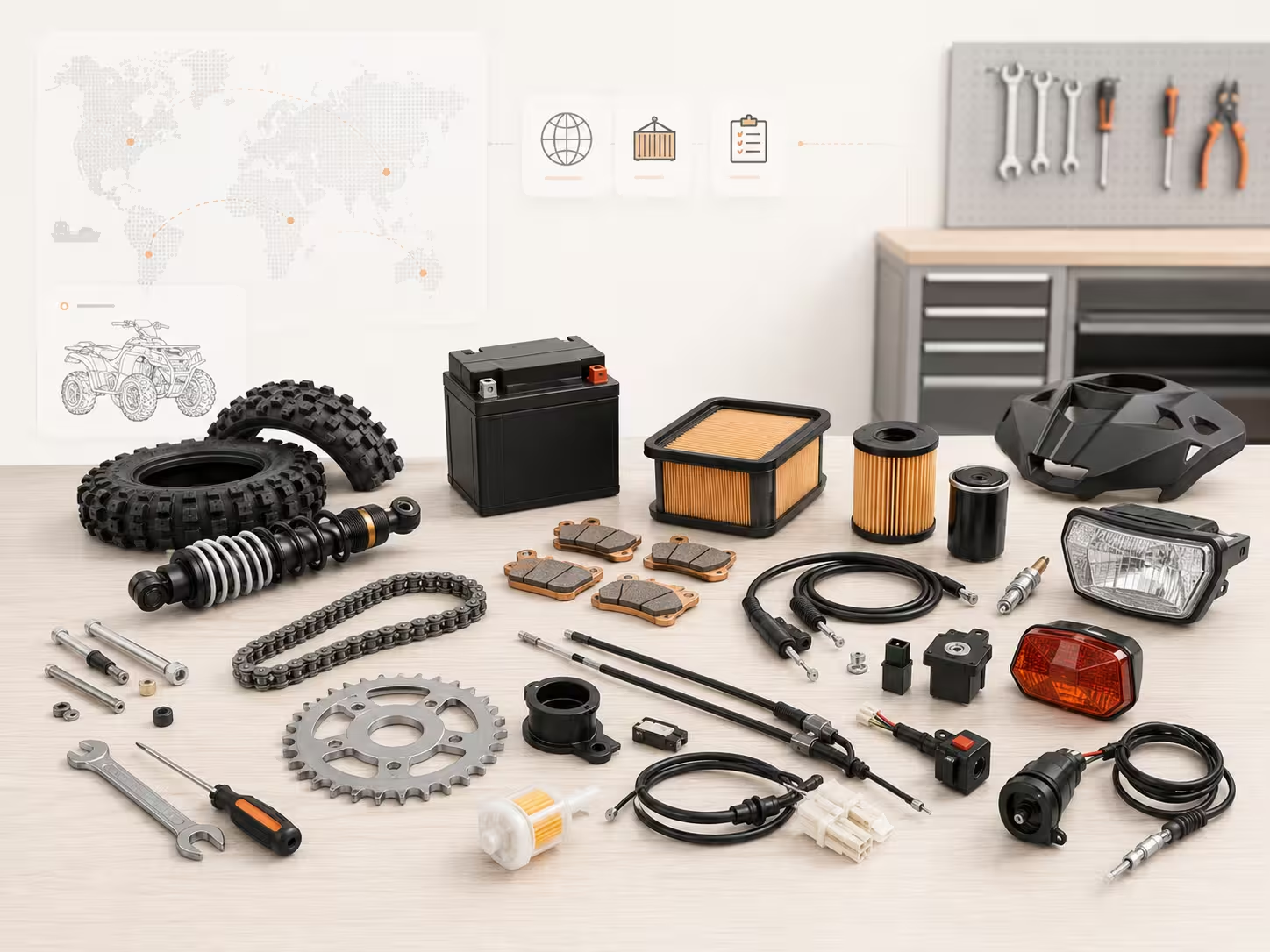
The practical questions to settle are which parts are stocked and shippable, how parts are ordered with or after a vehicle order, and how fast-wear and consumable items are supplied. For dirt bike programs, the same ATV spare parts support extends to wholesale dirt bike parts such as clutch and chain components, controls, and bodywork.
Use the checklist below to define your parts plan with the manufacturer before you order:
Fast-wear / consumables
Brake pads, cables, filters, chains, sprockets
Tires & wheels
Tires, wheels
Bodywork
Plastics
Electrical
Batteries, electrical components, lights, switches and control parts
Chassis
Suspension parts
Engine
Engine service parts
Parts for older and superseded models
Vehicles outlive their model year. Before you commit, confirm how parts are handled for models that are later updated or replaced, and consider ordering a buffer of high-wear items with your initial shipment so your service bench isn’t waiting on a second order. The goal is a clear parts process you can rely on — not a promise that every part is always on the shelf.
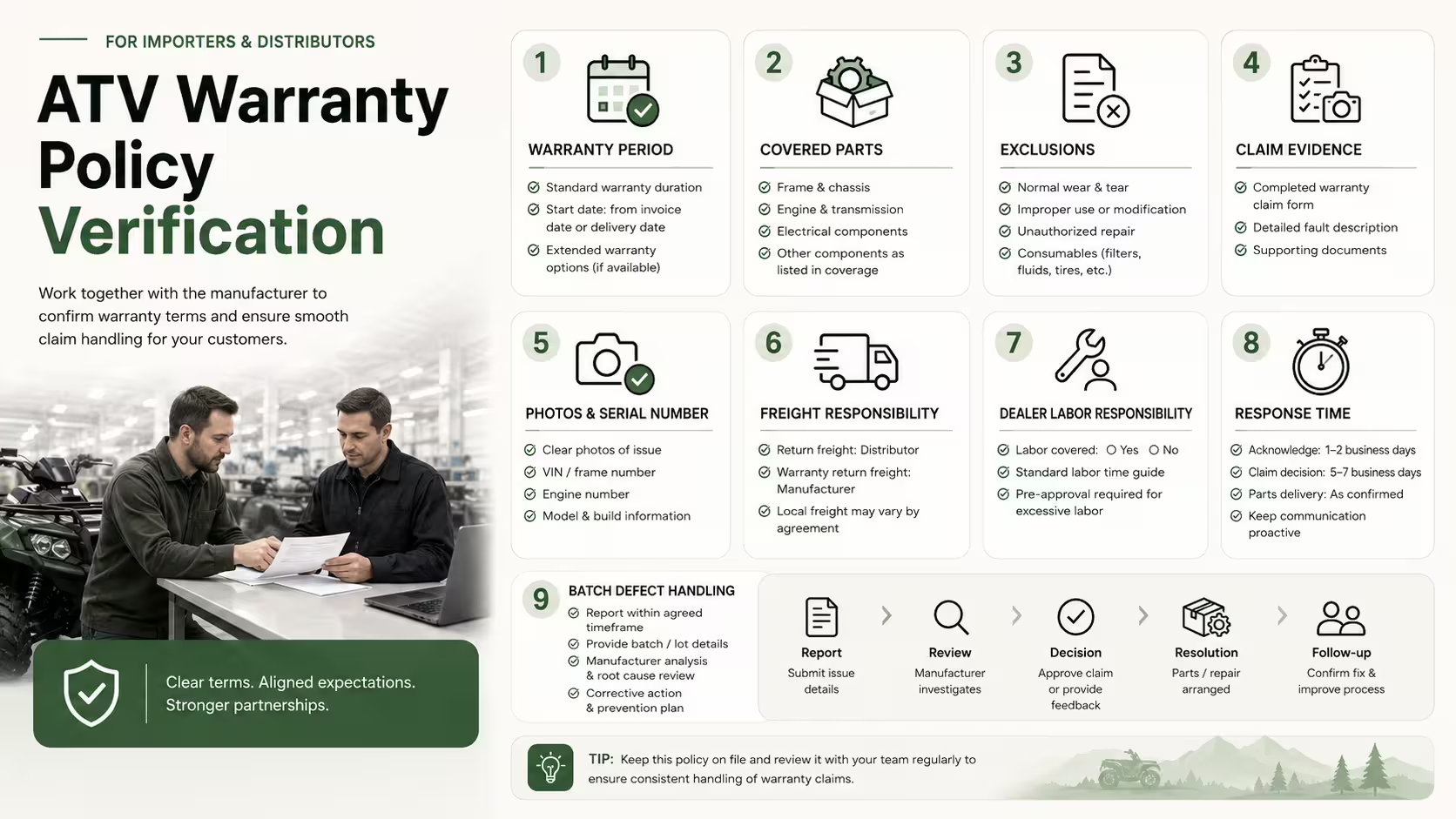
How Does Warranty Support Work for Wholesale ATV and Dirt Bike Dealers?
In a wholesale context, warranty is less about a headline number than how a claim gets resolved across a border. What matters is coverage scope, exclusions, and the claim workflow.
Coverage typically centers on manufacturing defects in materials and workmanship for a period set in your dealer agreement and varying by model — which is why this FAQ doesn’t quote a fixed term. Common industry exclusions include normal wear items (tires, brake pads, belts, filters), damage from misuse, accident, or poor maintenance, and unauthorized modifications. Knowing the exclusions in advance lets you set honest expectations with your own customers.
How claims are handled
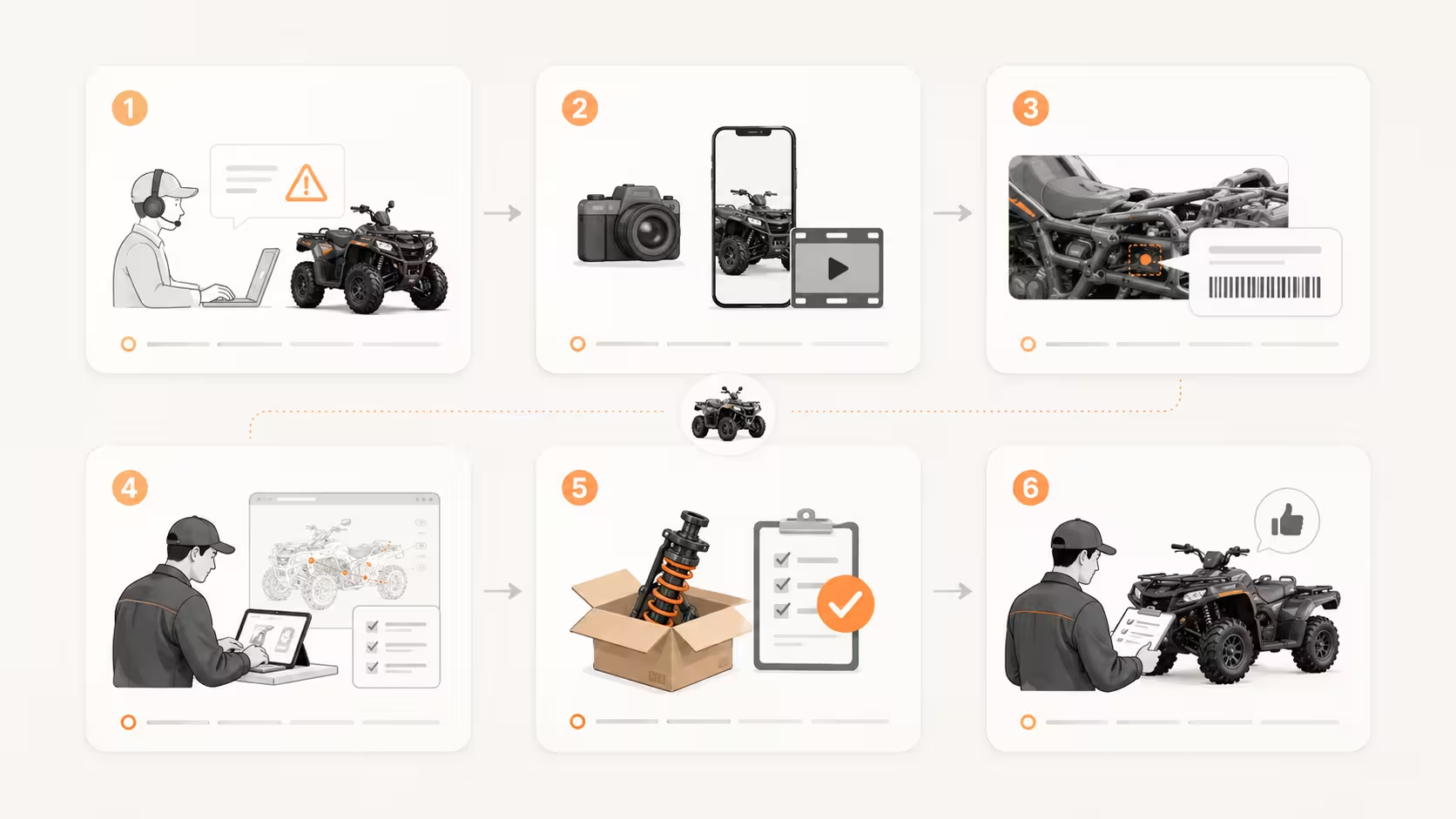
A workable cross-border process is documentation-led: you report the issue with evidence (photos, video, VIN/serial, description), the cause is assessed, and approved claims are usually resolved through replacement parts rather than returning whole units. Agreeing this workflow before you order matters more than a long warranty period you can’t practically use. Rental and high-utilization buyers should raise their use case explicitly, since duty cycle affects both maintenance planning and how warranty is interpreted.
To make a claim move quickly, prepare the following before you submit it:
- ModelIdentifies the exact platform and applicable parts
- VIN / frame numberConfirms the unit and its production batch
- PhotosShow the fault clearly for first assessment
- VideoDemonstrates intermittent or functional issues
- Issue descriptionExplains symptoms, when they started, and conditions
- Usage conditionHours, terrain, and duty cycle inform the assessment
- Maintenance record (if available)Shows servicing was performed as recommended
- Dealer contactRoutes the claim and replacement correctly
- Requested replacement partSpeeds resolution when the fault is already clear
Do You Offer OEM and Private-Label ATVs and Dirt Bikes?
Yes — OEM and private-label programs are how distributors and agents build a brand rather than reselling a generic catalog.
What can be customized
Depending on the model and order, customization commonly spans your logo and livery, color options, selected specification and configuration choices, accessories, and branded packaging, manuals, and documentation. Scope varies by platform, so the practical first step is to share the model and the changes you want.
How a private-label program is set up
A private-label build typically moves from design discussion to artwork and spec approval, then a sample or confirmation step, and finally branded production. Each stage adds time relative to a standard order, so factor it into your lead-time planning. If you’re developing a private-label ATV or dirt bike line, choose a private label ATV manufacturer that can confirm artwork, specification, and packaging in writing, and start early so design approval doesn’t compress your production window.
What Dealer Support Is Available After the Order Ships?
The order is the start of the relationship, not the end of it — and after-sales support is what separates a one-off transaction from a program you can scale.
Technical, marketing, and logistics support
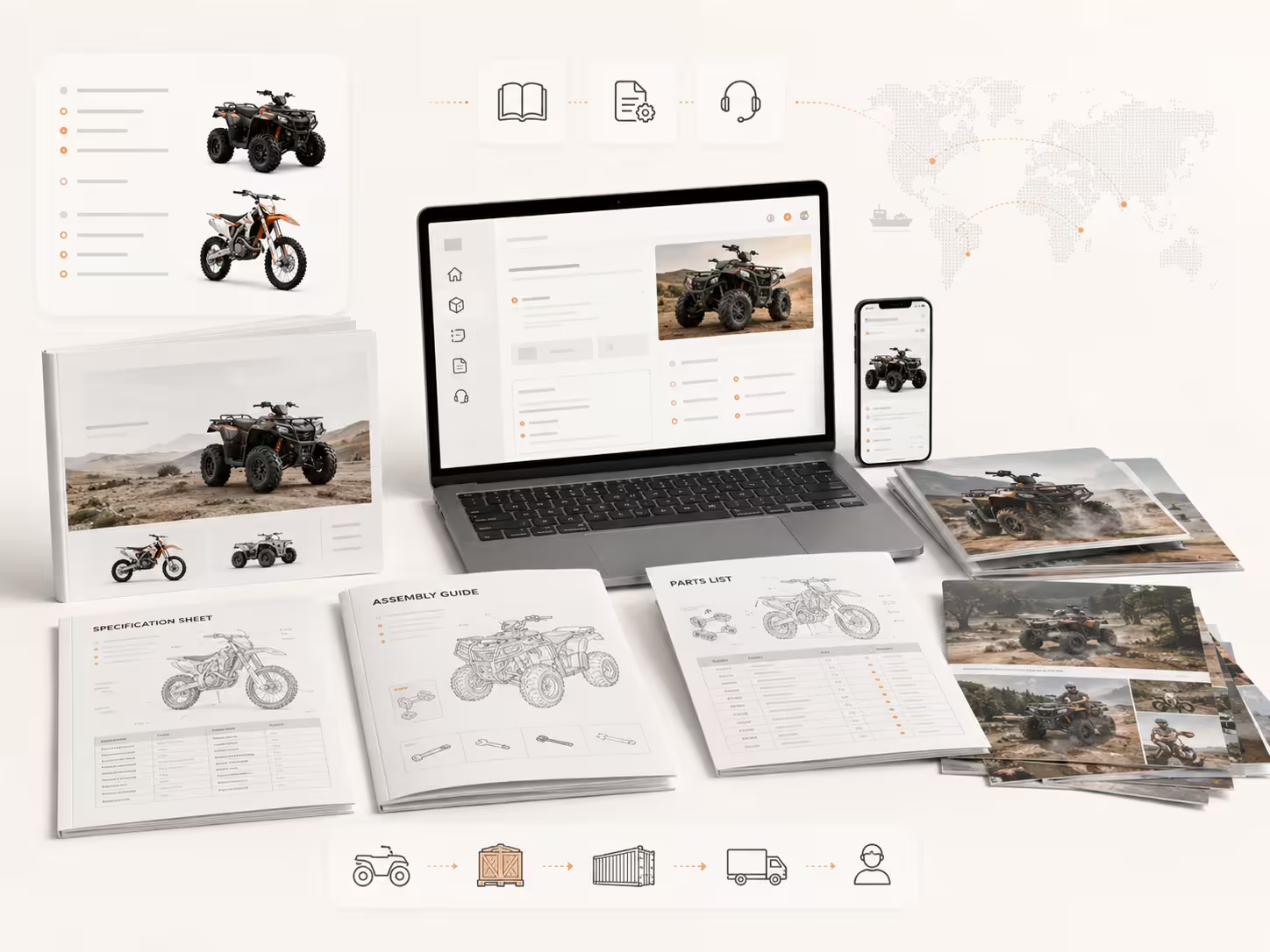
Dealer support generally falls into three areas. Technical: assembly and service manuals, setup guidance, and troubleshooting for your service bench. Marketing: product images, specifications, and catalog material. Logistics: shipping documentation and coordination so customs and delivery go smoothly. Clarify which elements of this ATV dealer support you’ll receive and in what format, so your team can sell and service from day one.
Becoming a dealer or regional agent
If you’re planning ongoing volume, a dealer or regional agent arrangement usually offers more structured support, clearer terms, and continuity across reorders than ad-hoc purchasing. If you want a partnership rather than a single shipment, say so early.
How Do I Run Due Diligence on a Chinese ATV Manufacturer?
Many buyers begin with a broad search like “ATV manufacturer China” and quickly find that Chinese ATV wholesale can offer strong value — but Chinese ATV manufacturers vary widely, and the difference between a good decision and an expensive mistake is almost always in the due diligence. The checklist below works for evaluating any ATV manufacturer in China — use it to ask the same questions of every factory on your list, including this one.
| What buyers should check | Why it matters | What to ask YKF MOTO |
|---|---|---|
| Factory vs. trading company | A real factory controls quality, parts, and customization; a trader adds a layer between you and the source | Are you the manufacturer? Describe your production facility and capabilities. |
| Verifiable documentation & test reports | Documents and test reports only help if they’re genuine and match your market | Which compliance documents and third-party test reports cover these models and my destination? |
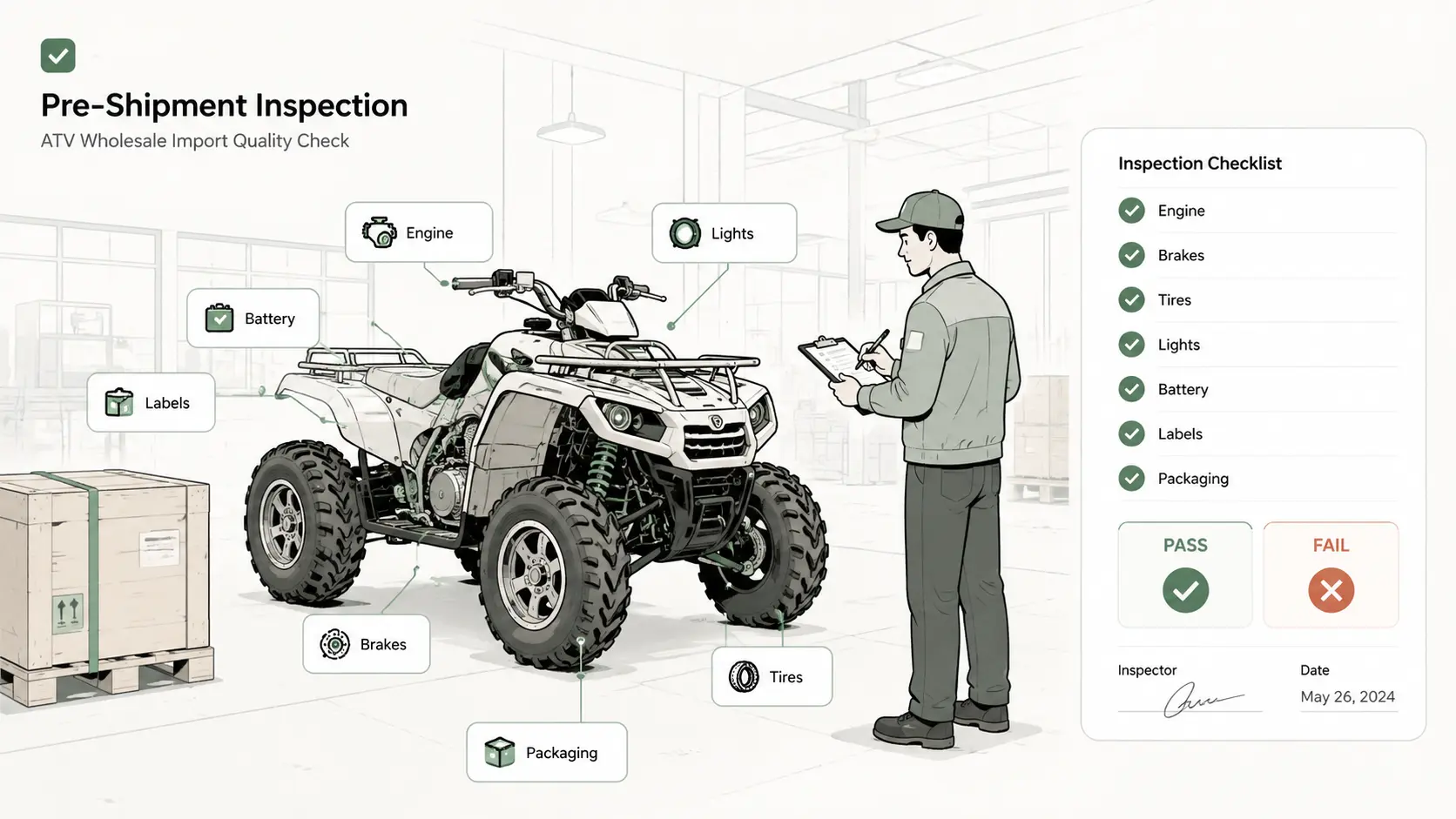
| Quality-control process | Consistent QC across a batch prevents defects reaching your customers | How is quality controlled — incoming, in-process, and pre-shipment? |
| Spare-parts infrastructure | Parts availability over the vehicle’s life protects your reputation and service revenue | How are spare parts stocked and ordered, including for superseded models? |
| Warranty & claims process | A warranty is only as good as the cross-border claim workflow behind it | What’s covered, what’s excluded, and how is a claim handled from my country? |
| Export & reference track record | Experience shipping to your region reduces compliance and logistics surprises | Have you exported to my market, and can you share references? |
| OEM / private-label capability | Customization scope determines whether you can build a brand | What can be customized, and what does the program involve? |
| Communication & responsiveness | Pre-sale responsiveness signals post-sale support | Who is my contact, and how are technical and after-sales queries handled? |
Run this consistently and the right manufacturer will stand out for the clarity of its answers, not the volume of its claims. You can review the company background against this checklist, and our wholesale buying guide goes deeper on distributor-specific questions.
How Do I Request an Accurate Wholesale Quote?
The fastest way to get a usable quote — rather than a string of clarifying emails — is to send the right details the first time. Include:
- Models and quantities you’re interested in (a shortlist is fine).
- Destination country, so compliance and shipping can be addressed.
- Road-use intent (off-road only or street-legal), since this affects which documentation applies.
- Branding / OEM needs, if you want custom livery or private label.
- Target timeline, so lead time can be checked against the production calendar.
- Preferred Incoterm (e.g., FOB or CIF), so the quote reflects your landed-cost basis.
With those details, the reply can come back as a real quote covering pricing, lead time, applicable documentation, and the recommended shipping arrangement. When you’re ready, send your requirements or apply to become a dealer.
Frequently Asked Questions
There’s no single MOQ — it depends on the models, engine class, and customization. Standard, in-stock orders allow lower minimums; OEM and private-label builds carry higher ones. Your realistic minimum is confirmed at quote.
It combines production (or stock pick) and shipping, and is influenced by stock availability, whether the order is standard or OEM, and seasonal demand. An order-specific timeline comes with your quote.
It varies by vehicle type, road-use status, engine type, rider age category, and destination country, and confirming them is the importer’s responsibility. No document is required for every vehicle — ask for the documents and test reports that apply to your models and market.
No. Product/import certification concerns whether the vehicle can be legally imported and sold; rider safety certification is a training credential for the operator. A manufacturer supplies vehicle documentation, not rider certificates.
YKF MOTO can support genuine spare parts supply for applicable models. Dealers should confirm the recommended spare parts list, fast-wear items and reorder process before placing an order.
Coverage focuses on manufacturing defects for a period set in your dealer agreement and varying by model, with standard exclusions for wear items, misuse, and modifications. Claims are documentation-led and usually resolved through replacement parts.
OEM and private-label customization can be supported for applicable models. Options may include branding, livery, color, selected specifications, accessories, and packaging, depending on the model and order requirements.
It generally spans technical help (manuals, troubleshooting), marketing materials (images, specifications), and logistics (shipping documentation). Ongoing-volume buyers can arrange a dealer or regional agent relationship.
Confirm it’s a real factory rather than a trader, verify documentation and test reports, understand the QC process, and check spare-parts, warranty, and export experience for your market. Ask every candidate the same questions and compare.
Mixed orders across ATVs, dirt bikes, go karts and UTVs are often possible, depending on model availability, loading plan, category mix and destination requirements.
Include your model shortlist and quantities, destination country, road-use intent (off-road or street-legal), branding/OEM needs, target timeline, and preferred Incoterm — enough for a quote covering price, lead time, documentation, and shipping.
Ready to Get Your Wholesale Quote?
Send us your target models, quantity, destination country, road-use status, certificate requirements, OEM/private-label needs and spare parts plan. YKF MOTO will help you confirm the right wholesale solution for your dealership or distribution business.